We're packing in:
Place your order early to get your parcel on its way today!
Frequently Asked Questions
Humans generally cannot hear frequencies classified as ultrasound. In very rare cases, people with exceptionally sensitive hearing may perceive it, but this is extremely uncommon.
No, ultrasound is generally absorbed by walls. Very thin drywall may allow minimal transmission, but brick or concrete walls block it almost completely.
Most pets have adapted to human environments, which has reduced their hearing sensitivity. Some dog breeds and younger animals may hear ultrasound better, but ultrasonic repellents for pets have very low effectiveness.
If you hear strange noises from the ceiling, it may be a stone marten, mouse or rat. An ultrasonic rodent repeller can be an effective solution. We recommend Vadalarm Smart Mono or Vadalarm Rodent Repeller.
Unfortunately, biology shows that ultrasonic products have no effect on birds, as they cannot hear ultrasound. Their hearing is more similar to humans than to wild mammals.
If you hear scratching or scurrying noises coming from the attic, ceiling, basement or insulation, notice strong and characteristic odors, or find small black droppings, there is a high likelihood that rodents are present in your home.
Martens leave noticeably larger droppings, mark their territory with secretions from their scent glands, and in some cases animal remains may also be found.
This depends on the power of the device and the characteristics of the environment. In open areas, a single repeller can cover several hundred square meters, while indoors, in segmented or divided spaces, a smaller effective area should be expected. With higher-power ultrasonic wildlife repellers (such as the Vadalarm Smart Pro, Duo, Tripla and Hexa models), coverage of several hectares is also possible.
If you are looking for a more humane solution instead of traps and mousetraps, using an ultrasonic repeller is a recommended option.
Ultrasonic repellers can provide an effective solution when they are properly installed and the emitted ultrasonic waves are not blocked by obstacles.
Yes, martens are also sensitive to the frequency range in which ultrasonic repellers operate.
No, the installation process is very simple: you place the repeller facing the direction from which you heard the scratching noises, then plug it into a power outlet or switch it on.
Yes, ultrasonic repellers can operate effectively both outdoors and indoors.
Ultrasonic repellers generally operate using variable frequencies to prevent this from happening, and Vadalarm products are specifically designed to work in this way.
Ultrasonic repellers generally do not disturb dogs or cats, humans cannot hear them, and they do not cause harm to either animals or people.
There is a significant chance that rodents may also move into your property. As a preventive measure, placing an ultrasonic repeller directed toward the neighboring side can greatly reduce this risk.
Yes, the likelihood of rodent activity increases during the winter period, typically between September and March.
Based on our experience, unfortunately they do not work effectively. Ultrasonic insect repellers lack strong scientific support, as insects primarily rely on vision for orientation and do not possess well-developed hearing. As a result, they generally do not have sensory organs capable of detecting ultrasonic sound.
Many people swear by PET bottles that crackle due to thermal expansion, however it must be acknowledged that this method is rather inconvenient and its effectiveness is questionable. The main problem with martens and rodents nesting in car engine compartments is that the vehicle’s bodywork and engine bay sound insulation—especially in modern cars—absorb the ultrasonic sound used for deterrence. Therefore, if your car’s engine compartment is very crowded, it is recommended to place a Vadalarm ultrasonic rodent repeller in front of the vehicle instead. If there is more space in the engine compartment, Vadalarm rodent repellers can safely be used there with the automotive accessory kit.
Wild boars generally do not attack humans without provocation, so there is no immediate reason to panic. However, if the animal is startled and a sow is accompanied by her piglets, there is a real risk that she may charge toward you. In such a situation, the simplest and safest option is to climb a nearby tree, as wild boars are unable to attack at height.
No, the mole repeller transmits vibrations into the ground. As a result, a dog may at most hear the operating noise of the device, but it is not disturbing for the animal.
It is advisable to use an ultrasonic device that operates with varying frequencies. The most effective frequency range against martens is between 20 and 30 kHz.
Marten droppings are larger and darker in color compared to mouse droppings. A strong, pungent urine smell characteristic of martens can also help with identification.
Mice reach sexual maturity at approximately 4–6 weeks of age, and after a gestation period of about 20 days, they typically give birth to 5–12 offspring.
Yes, unfortunately these animals can very easily transmit a wide range of infections. Examples include hantavirus, salmonella, listeriosis and rabies.
Smaller birds often cause problems by pecking at and consuming the fruit. It is worth trying an acoustic bird repeller, as smaller birds are particularly afraid of the sounds of birds of prey.
In battery-powered devices, the battery gradually degrades over time, therefore it is recommended to replace it every 4–5 years. The other components are more durable, and such a repeller can typically operate reliably for 5–7 years.
The effective range depends on the speaker used and can vary from just a few meters up to as much as 1–2 kilometers.
No, ultrasonic repellers do not affect sleep processes occurring during the REM phase.
The sound of acoustic bird repellers will most likely be audible in the immediate vicinity. For this reason, they are available in different sizes and power levels, so that when protecting smaller areas, they can also be used in residential or urban environments without causing unnecessary disturbance.
Unfortunately not. The hearing range of bats spans a very wide spectrum, and they also have the ability to switch frequencies if they detect interference in the channel they are currently using.
A wild boar’s diet consists of approximately 80–90% plant-based food and 10–20% animal-based food or various organic waste materials.
No, a permit is not required. These repellents do not have any harmful effects on animals.
No, the use of bird repellers is not allowed in Natura 2000 protected areas during the breeding season. In all other cases, their use is permitted.
Pigeons are intelligent animals and are therefore difficult to repel. It is advisable to use a bird repeller that is capable of emitting the calls of multiple predatory bird species, as this reduces the chance of habituation.
Peanut butter, walnuts, almonds and cheese are among the most effective bait options for mouse traps.
No.
Yes, it can be used in attics as well, and in any less cluttered space where ultrasound can propagate properly.
I do not recommend this type of repeller. If a car traveling at 80 km/h does not deter wildlife by its presence alone, then a small whistle will not be effective either.
If your vehicle has comprehensive insurance (CASCO), or if your insurance policy includes such coverage, the insurance company will compensate for the damage.
If the electric fence complies with the relevant standards, touching it will not cause serious harm, however it is unpleasant and should be avoided.
If the electric fence enclosure borders a public road, the fence conductors must be installed at least 1 meter away from the road, or at a distance that ensures that people passing along the road cannot come into contact with it under any circumstances. In all cases, warning signs must be installed every 50 meters and at every change of direction of the fence.
The Vadalarm.
This is a more difficult case, as ultrasound only penetrates solid surfaces to a limited extent. In the case of drywall constructions, it is therefore possible that the repelling effect will not be 100% effective. What can be done is to carefully observe which part of the area the scratching noises come from and direct the device specifically toward that location.
Wild boars are sensitive to high-frequency sounds, therefore a properly positioned repeller can provide protection against them, for example a device such as the Vadalarm Smart Duo.
The sign indicates that on the given road section there is an increased likelihood of wildlife such as roe deer, red deer and wild boars crossing the roadway.
If you hit a wild animal in Hungary, you are legally required to report the incident. If there has been a serious accident or injury, you should call the emergency number 112. If there are no serious injuries, the incident must be reported to the competent hunting association.
The electric fence operates as an electrical circuit that generates impulses. If this circuit is not properly closed through grounding, the electric fence will not work effectively, and in some cases may not function at all.
Ultrasonic repelling is not effective in situations where the emitted sound is blocked by walls, thick furniture, ceilings or other solid obstacles. Effectiveness may also be reduced in highly segmented or cluttered spaces where ultrasound cannot propagate freely. In outdoor applications of ultrasonic animal repellents, it is also important to ensure that the speakers are not obstructed by plant leaves or tree branches.
Solid walls such as brick or concrete, thick wooden structures and sound-absorbing materials reduce the propagation of ultrasound to the greatest extent. Softer materials, such as textiles and cardboard, can also significantly weaken the effect. Unfortunately, ultrasound is also largely absorbed by drywall, which is commonly used in the construction industry.
Visible results can usually be observed between a few days and a few weeks, depending on the type of animal, the extent of the infestation, and how optimally the device is positioned. It is certain that a significant result should be noticeable within 14 days. Even if the presence of the animals does not disappear completely, it will almost certainly be greatly reduced.
Yes. In larger or segmented areas, the use of multiple devices is recommended so that ultrasound can cover the protected area from all directions and no “dead zones” remain. The most important aspect is to fully protect the side of the area from which the animals are approaching.
To select the appropriate device, it is important to consider which type of animal you want to protect against, whether the device will be used indoors or outdoors, and the size of the area to be covered. Based on these factors, it is easy to determine which model is the most suitable. For smaller indoor areas and rodent protection, lower-power devices such as the Vadalarm Rodent Repellers and the Vadalarm Smart Mono are ideal. For protecting larger agricultural areas against wildlife, the Vadalarm Smart Pro, Duo, Tripla, Hexa and their variants are the most suitable, as they are equipped with solar panels on top and lithium batteries inside.
The models primarily differ in terms of performance, covered area, repelling modes and additional features. The Vadalarm Smart Pro (single-speaker) and the Vadalarm Smart Duo (dual-speaker) models are designed for smaller gardens, while the Vadalarm Smart Tripla, Hexa and their variants are intended for larger areas and specifically for agricultural use.
There are models that can be used both indoors and outdoors, however outdoor environments require higher performance and weather-resistant construction, which is usually combined with a solar panel to provide power supply. Therefore, it is always recommended to choose the model intended for the specific use case: primarily the Vadalarm Smart Mono and smaller rodent repellers for indoor use, and the larger variants for outdoor applications.
The repeller should generally be installed at the typical movement height of the target animals. For rodents, lower placement is recommended, while for larger animals the device should be installed somewhat higher. In the case of wild boars, roe deer and deer, the repeller should be placed approximately at waist height, whereas for rabbits it is recommended to install it around knee height.
The device should always be directed toward the direction from which you expect the animals to approach. It is important that there are no direct obstacles in front of the ultrasonic emitter, therefore it should not be placed inside bushes, behind cabinets, or especially inside enclosed boxes.
For the best results, the repeller should be operated continuously, especially during the initial period. This prevents animals from becoming accustomed to the environment. Vadalarm Smart animal repellers are programmed to take into account the battery charge level and the current time of day when calculating activation frequency. Their operation is also partially randomized to further reduce the likelihood of animals getting used to them.
Ultrasonic repellers generally require minimal maintenance. From time to time, it is advisable to check their operation and, in the case of outdoor use, clean the device from dirt and debris. Always ensure that the speakers are not exposed directly to water or high-pressure air. If larger debris enters the device, such as leaves, it should be removed. If the device is equipped with a solar panel, it is important to ensure that the surface remains free of limescale so that it can charge with maximum efficiency.
The lifespan is primarily influenced by weather conditions, continuous operating time and the quality of the power supply. In battery-powered devices, the condition of the battery is the determining factor. Fortunately, Vadalarm products can be serviced at the Vadalarm service center in Budapest, their batteries are replaceable, and with proper maintenance and, if necessary, servicing, their lifespan can even be doubled.
In general, it is recommended to replace the battery every 4–5 years, as battery capacity gradually decreases over time. Since the battery is permanently built into the products, replacement can only be carried out at the official Vadalarm service center, and home replacement is not recommended.
The purpose of ultrasonic repellers is to keep animals away, not to cause them harm. Devices operating on variable frequencies do not cause long-term stress or health damage.
A common misconception is that ultrasonic repellers are equally effective against all animals and in all environments. In reality, effectiveness strongly depends on placement and environmental conditions. Ultrasonic repellers are not suitable for deterring animals that do not have ears (such as fruit flies, insects, mosquitoes, flies, etc.), nor are they effective against animals that are physically unable to hear ultrasonic frequencies, such as birds.
Yes, ultrasonic deterrence is considered a humane solution, as it does not cause injury or permanent harm to animals; it merely repels them from the protected area.
Yes, Vadalarm products comply with the relevant safety and technical regulations of the European Union. They do not contain hazardous substances and their operation does not pose any risk to human health.
When using ultrasonic repellers near nature conservation areas, local regulations should always be taken into account. In general, the use of ultrasonic repellers is not prohibited, but certain areas may impose restrictions. Compared to audible-range deterrents, a major advantage is that birds, which are typically the most protected species, cannot hear ultrasound either during or outside the breeding season.
The effectiveness of ultrasonic deterrence is significantly influenced by placement, the presence of obstacles, and the behavior of the specific animal. If the device is not installed in an optimal location, the desired results may not occur. In addition, it is important to consider during planning that animals will not leave an area if they have no alternative options. Therefore, animal deterrence can only be truly effective if animals have access to shelter, food, or water sources elsewhere and are able to relocate there.
If ultrasonic deterrence does not produce satisfactory results, or if the target animal does not respond to it, it is advisable to use alternative methods such as acoustic or visual deterrence. Fortunately, Vadalarm Smart products also offer audible-frequency wildlife and bird deterrence, which can be activated to increase effectiveness, along with the optional Turbo mode. If this still does not yield results, it is recommended to combine sound with light using a Vadalarm Smart Flash product, or to introduce scent-based deterrents, such as Vaporix wildlife repellent.
Standard electric fences are not dangerous to humans. They deliver short, pulsed electric shocks that are unpleasant but do not cause injury or permanent health damage. It is important to note that the voltage produced by electric fences is neither comparable in nature nor in current strength to household mains electricity.
An electric fence uses high voltage but extremely low current and very short-duration pulses. This is sufficient for deterrence but is not dangerous to living beings.
When properly installed and clearly marked with warning signs, an electric fence does not pose a serious danger. However, increased caution is required in the case of small children, and the placement of warning signs is always recommended. In principle, it should not cause problems for them either, but caution is advisable.
At the moment of contact, a short but unpleasant electric shock is felt, causing a reflexive release of the wire. The effect is not lasting and does not cause injury. In this case, the electric current flows from the person’s hand through their body and exits via the feet into the ground. Therefore, if the electric fence is touched without standing directly on the ground, the shock may feel weaker. This is also why the intensity of the shock can be influenced by the type of footwear being worn.
In general, no special permit is required, however certain rules must be followed in residential areas or near public roads. In such cases, it is advisable to familiarize yourself with local regulations. It is always mandatory that the fence is installed within the property boundary and at a safe arm’s-length distance, and if it runs parallel to a road, warning signs must be placed every 50 meters.
Warning signs must be placed at all points where the electric fence may come into contact with public areas, roads, or pedestrian traffic. It is generally recommended to install the signs at intervals of every 50 meters.
The electric fence must be installed in such a way that people traveling on the road cannot come into contact with it under any circumstances. This typically means maintaining a minimum distance of at least 1 meter from the public road.
Yes, an electric fence can also be used in residential areas, provided that safety regulations are complied with, appropriate warning signs are installed, and it does not pose a danger to the surrounding environment.
The height of the fence wires depends on the type of animal to be deterred. For smaller animals, the wires should be installed lower, while for larger-bodied animals they must be placed higher, often using multiple strands. In the case of rabbits, it is generally recommended to place the wires more densely near the ground, whereas for deer it is advisable to add an additional strand, potentially using tape, at a height of approximately 1.5 to 2 meters.
The size of the area that can be protected depends on the power of the device, the length of the fence and the quality of the grounding. A sufficiently powerful unit is capable of supplying even several kilometres of fencing. The largest effective coverage can be achieved when the protected area is square or circular in shape. In such cases, up to 50 hectares can be enclosed and protected using a single device.
For smaller animals, lower voltage levels are sufficient, while larger-bodied or thick-skinned animals require higher voltage for effective deterrence. The animal’s fur also plays an important role; for example, for rabbits it is advisable to use a system of around 5–6 kV, similar to what is recommended for larger livestock such as cattle. For deer and wild boars, systems of up to 10 kV are recommended, while for containing horses, 4–6 kV may be sufficient. For smaller dogs, even 2–3 kV can prove effective, as they tend to learn quickly and eventually avoid touching the fence altogether.
Yes, a properly powered electric fence can provide effective protection against wild boars, especially if the wires are installed at the appropriate height and density. The voltage level of the electric fence is also crucial: for wild boars, a minimum of 8 kV is recommended. In addition, it is important to use high tensile-strength conductors, as wild boars can hit the fence with significant force due to their large body mass, and if the fence breaks, the electric fence will no longer provide protection.
Grounding ensures that the electrical circuit is properly closed. In the case of poor or insufficient grounding, the effectiveness of the electric fence can be significantly reduced or may even cease entirely. It is therefore recommended to always use at least a three-point grounding system.
The choice depends on the area to be protected and the type of animals involved. For longer fences, highly conductive wire is recommended, while for temporary installations or for better visibility, tape or cord is preferable. In the case of deer, it is advisable to alternate between cord and tape, placing brightly colored tape on the upper strand. It is important that for larger animals, materials with a tensile strength of at least 300 kg are used.
The most common issues include poor grounding, vegetation touching the fence wires, or the use of an energiser with insufficient power. Prolonged improper use can eventually damage the device itself due to short circuits. If the unit contains a fuse and you do not hear the characteristic clicking sound, it is advisable to check the fuse. When operating the fence from a battery, its voltage should always remain above 11.5 V.
Voltage drop can be caused by excessively long fence lines, damaged conductors, poor connections, or wet and insufficient grounding. A certain minimal voltage loss is normal even in properly sized electric fence systems; however, it should not exceed a maximum of 20% of the initial output voltage.
In such cases, it is advisable to check the voltage level and the placement of the fence wires, and if necessary, use additional conductors or a more powerful energiser. During repairs, it is essential to use proper, professional solutions for wire connections, specifically electric fence connector clamps designed for fence conductors.
During rainy conditions, moisture in the soil and vegetation can conduct electricity away from the fence, reducing its effectiveness. With proper grounding, this effect can be mitigated, as grounding efficiency actually improves when the soil becomes moist. It is essential to ensure that vegetation, especially when wet, never comes into contact with the fence.
Yes, an electric fence can also be used during winter; however, when the ground is frozen, the effectiveness of grounding may be reduced. Therefore, proper grounding is especially important under winter conditions.
An electric fence is an ideal solution when a larger area needs to be protected on a long-term basis and when it is necessary to physically restrict animals rather than merely deter them. However, while it offers clear advantages, it also has drawbacks, as installation and maintenance require manual labor. It is recommended to inspect the system at least once a week.
The Vadalarm mole repeller operates by transmitting vibrations into the soil. These vibrations disturb the moles’ orientation and sense of comfort, causing them to avoid the protected area. Unlike many other mole repellers, the Vadalarm solution uses a powerful motor to generate vibrations that can travel over long distances in the ground.
Most mole repellers – including Vadalarm mole repellers – operate using vibrations. Moles are far more sensitive to underground vibrations than to ultrasound. In addition, ultrasound does not travel effectively through soil, which is why it cannot achieve meaningful results in mole control.
Moles have poor eyesight but are extremely sensitive to ground vibrations, which they instinctively interpret as signs of danger in their natural environment. Ultrasound, on the other hand, propagates poorly through soil, making it far less effective against moles.
The area covered by a mole repeller depends on the type of soil and the performance of the device. On average, a single unit is suitable for protecting several hundred square meters. Vadalarm mole repellers can be effective over areas of up to 500–700 square meters.
In most cases, it takes a few days or up to one or two weeks for moles to leave the area. The exact time frame depends on the number of moles present, soil conditions, the level of built-up structures (such as building foundations), and the availability of alternative habitats for the moles.
After installation, moles may still appear temporarily, as it takes time for them to perceive the vibrations as persistently unpleasant and eventually move away from the area.
After installation, moles may still appear temporarily, as it takes time for them to perceive the vibrations as persistently unpleasant and relocate away from the area. There are cases where moles initially create more molehills after activation, as they actively search for an escape route from the protected zone. This behavior typically stops after a few days.
The mole repeller should ideally be installed near existing molehills or in the center of the area to be protected, ensuring that the vibrations can spread evenly through the soil. However, it is important not to place the device directly into a molehill, as this may cause the tip of the repeller to vibrate in air inside the tunnel, preventing the vibrations from effectively propagating through the ground.
The device should generally be inserted into the ground in such a way that the vibration-generating part is completely embedded in the soil and maintains firm contact with the ground to ensure effective transmission of vibrations.
Yes, on larger areas or in soils with a loose structure, the use of multiple devices is recommended to ensure that no areas remain uncovered. In most cases, it is also possible to repel moles with a single device, but in such situations the repeller needs to be repositioned regularly.
No, the mole repeller operates by transmitting vibrations into the ground, which humans and most household pets do not perceive as disturbing. However, vibrations may travel up along the shaft and housing of the device above ground, so when standing next to it, you may hear it operating.
In Hungary, the mole is a protected animal, therefore its killing or harming is prohibited. A mole repeller provides a humane solution, as it does not injure the animal. The statutory conservation value of a mole in Hungary is 25,000 HUF.
Common mistakes include installing the device too shallow, insufficient contact with the soil, or placing it too close to hard surfaces where vibrations cannot propagate properly. These typical errors should definitely be avoided during installation.
In such cases, it is advisable to check whether the device is operating properly, reconsider its placement, or use multiple mole repellers to cover the entire area. Vadalarm products come with an extendable 14-day withdrawal guarantee, so if you decide to switch to another solution and notify us in time, we can repurchase the product.
Acoustic bird repellers operate using audible sounds that create a sense of danger in birds. Most commonly, they emit the calls of predatory birds or alarm-type noises, causing birds to avoid the protected area.
Bird repellers operate using audible sound. Ultrasound is not effective against birds, as their hearing functions in a frequency range similar to that of humans.
Birds are not sensitive to ultrasonic frequencies, therefore such devices do not trigger an escape response in them. For this reason, only repelling methods based on audible sound are recommended against birds.
Bird repellers are primarily effective against small to medium-sized birds, such as starlings, pigeons, crows and sparrows. The exact effectiveness also depends on the behavior of the species and the surrounding environment. In general, acoustic bird repelling is most effective against smaller, seed-eating species, as they are particularly afraid of the sounds of larger predatory birds.
Yes, if the repelling system always uses the same sound at the same intervals, birds may become accustomed to it over time. For this reason, devices that use variable sound patterns are more effective, such as the animal repellers of the Vadalarm Smart product range.
The bird repeller should be placed in the center of the area to be protected, in an open space where the sound is clearly audible. It is important that the sound can propagate freely without obstacles.
The bird repeller should be placed in the center of the area to be protected, in an open space where the sound is clearly audible. It is important that the sound can propagate freely without obstacles. If the bird repeller you are using is solar-powered, make sure that vegetation does not cover the solar panel.
For the most effective operation, the device should generally be installed above the vegetation to be protected, positioned so that the entire area requiring protection falls within the operating range of the bird repeller.
The size of the area covered depends on the volume of the device and the environmental conditions. In open areas, a single device may be suitable for protecting several hectares.
The size of the area covered depends on the volume of the device and the environmental conditions. In open areas, a single device may be suitable for protecting several hectares. Naturally, the covered area also depends on the type of bird repeller and the number of loudspeakers it is equipped with.
Yes, the sound of acoustic bird repellers may be audible in the surrounding area. In residential environments, it is therefore particularly important to set an appropriate volume level and operating schedule. Fortunately, the volume of devices in the Vadalarm Smart product range can be adjusted via the Vadalarm Smart mobile application.
Yes, the sound of acoustic bird repellers may be audible in the surrounding area. In residential environments, it is therefore particularly important to set an appropriate volume level and operating schedule. Fortunately, the volume of devices in the Vadalarm Smart product range can be adjusted via the Vadalarm Smart application.
Yes, it can be used, but local noise regulations and the peace of nearby residents must be taken into account. Devices with lower output or time-controlled operation are recommended.
Yes, it can be used, but local noise regulations and the peace of nearby residents must be taken into account. Devices with lower output or time-controlled operation are recommended. In the case of Vadalarm Smart animal repellers, dusk sensors or scheduling functions can also be used, both of which can be controlled via the Vadalarm Smart application.
In Natura 2000 protected areas, the use of bird repellers may be restricted, especially during the breeding season. In such cases, it is always advisable to check the applicable local regulations.
During the breeding season and the period of chick rearing, the use of bird repellers is not always recommended, as it may cause nature conservation issues.
Common mistakes include setting the volume too high in residential areas, improper placement, and using the device too infrequently or always in the same operating mode. If you want to avoid disturbing nearby residents, make sure to position the bird repeller so that it does not cause nuisance. For effective operation, it is recommended to choose a product that emits bird-audible sounds in a partially randomized manner, optionally with scheduling or daylight-based control. The Vadalarm Smart product family is designed precisely with these features.
In such cases, it is advisable to reconsider the placement of the device, review the settings, or combine the protection with other methods, such as visual deterrents.
In such cases, it is advisable to reconsider the placement of the device, review the settings, or combine the protection with other methods, such as visual deterrents. If you are using a Vadalarm Smart product, you can also try activating the Turbo mode or enabling additional audible sounds. These settings can be adjusted via the Vadalarm Smart application.
For the most effective long-term protection, it is recommended to combine acoustic deterrence with visual elements such as bird silhouettes or reflective devices. Birds have excellent eyesight and are able to recognize high-contrast and fine visual details from a considerable distance.
A GPS tracker determines its own position using satellite signals, then transmits this information via the mobile network to an application or web interface where the user can view the device’s current or previous locations.
In open areas, GPS trackers typically operate with an accuracy of a few meters. Among buildings, indoors, or under poor reception conditions, accuracy may decrease.
GPS determines the position based on satellite signals, while LBS estimates the location using mobile network cell towers. GPS is more accurate, whereas LBS can provide an approximate position even when GPS signal strength is weak.
While GPS trackers determine their position using satellites, Bluetooth trackers, such as AirTag and similar products, rely on nearby smartphones to determine their location. As a result, GPS trackers function almost anywhere mobile internet coverage is available, whereas Bluetooth trackers only work effectively in areas with a high density of people. Therefore, Bluetooth trackers are more suitable for densely populated urban environments, while GPS trackers are the better choice in sparsely populated or rural areas.
Indoors, GPS signals are often weaker or may not be available at all. In such cases, the device may use LBS or Wi-Fi based positioning, which is generally less accurate.
Yes, a mobile data connection is required to transmit location data. The positioning itself is performed via satellite signals, but an internet connection is necessary to send the data. The Vadalarm Tracker GPS tracker already includes a built-in SIM card provided by the manufacturer, so no separate SIM purchase is required.
After connecting the device to the Vadalarm Smart application, you can check the battery charge level of the Vadalarm Tracker.
For operating the Vadalarm Tracker, we selected a service provider that offers sufficient network coverage throughout the entire territory of the European Union.
When selecting your package, choose the option to include the 12V car power adapter. Using this adapter, you can connect the tracker directly to your vehicle’s battery. Simply plug the USB-C end of the adapter into the Tracker, and the installation is complete.
The Vadalarm Tracker was specifically designed for reliable outdoor use. Its housing provides IP65-rated protection, meaning it is resistant to dust and water exposure. It can safely be exposed to rain and dust; however, submerging it in water is not recommended.
If there is no network coverage, the device is unable to transmit data. Most GPS trackers store the collected data locally and transmit it once the network connection is restored.
If there is no network coverage, the device cannot transmit data. In such cases, the Vadalarm Tracker GPS device stores the collected data and forwards it once the network connection is restored.
Most GPS trackers operate using a SIM card to transmit data to an application or web interface. However, the Vadalarm Tracker already includes a built-in SIM card, so you do not need to purchase or manage one separately.
Yes, operating the Vadalarm Tracker is a subscription-based service. Depending on the selected service plan, the monthly fee can be as low as 1,000 HUF.
Yes, the built-in SIM card supports roaming, so the Vadalarm Tracker GPS tracker can also be used abroad.
The operating time of the Vadalarm Tracker on a single charge also depends on how much movement it detects. With minimal movement, the battery can last up to 20 days on one charge, while continuous movement can reduce the battery life to approximately one third of that duration.
Yes, the Vadalarm Tracker GPS trackers can also be used with continuous power supply, for example when connected in a vehicle. A 12V car power adapter is available as an accessory, which allows the device to be connected to a constant power source.
Once the battery is depleted, the tracker will no longer transmit data. Many devices provide advance notifications when the battery level becomes low.
After the battery is depleted, the tracker does not transmit data. As soon as it receives power again, it recharges and resumes normal operation.
Yes, the Vadalarm Tracker GPS tracker is specifically designed and well suited for tracking vehicles and work machinery.
Yes, the Vadalarm Tracker can also be used to track temporary or mobile valuables, provided that the device’s internal battery is sufficiently charged.
Yes, Vadalarm Tracker GPS trackers are commonly used for fleet management as well as for tracking work machines and vehicle fleets.
Yes, tracking your own property or vehicle is legal. Tracking another person is only lawful with their knowledge and explicit consent.
According to the GDPR, location data is considered personal data, therefore it may only be processed with an appropriate legal basis, proper information provided to the data subject, and adequate data security measures.
Yes, if the tracking is linked to another person, prior information and explicit consent of the data subject are required.
No, the Vadalarm Tracker does not record audio.
Apart from the IT staff of the operating company, only those individuals who have valid access credentials for the application or the web interface can access the GPS location data.
Yes, to use the Vadalarm Tracker you need to install the Vadalarm Smart application.
Yes, the Vadalarm Smart application required to use the Vadalarm Tracker is available for both Android and iOS operating systems.
No, installation is simple: you only need to thread a few cable ties through the openings on the side of the device and scan a QR code with your smartphone.
No professional assistance is required to install the Vadalarm Tracker. You only need to attach a few quick fasteners, and if you intend to use it in a vehicle, it is recommended to connect the 12V adapter and wire it to the vehicle’s battery.
Yes, many systems allow multiple users to be added and to access the tracker independently from their own smartphones.
Yes, the GPS signal can be interfered with using special devices, but doing so is illegal and relatively rare.
GPS trackers use low-power radio signals, which are not considered harmful to human health.
With the help of the GPS tracker, the movement of the vehicle can be monitored, which may assist in recovery, but the return of the vehicle cannot be guaranteed.
Refund guarantee
If you have any problem with the product-what you ordered from us-, you can send it back to us in 14 days. Above in the menu you can read about our return policy particularly.
Fast shipping in 48h
If you order a simpler package on the morning of a working day, there is a good chance that you will receive it in 3 days!
A favorite brand by thousands of customers
The Vadalarm products are so popular from the beginning because the simple formation is owing that you can install it easily.
Secure pay
Use your debitcard or credit card to pay online with Barion, one of the best-known Central European payment providers.
Cash on delivery
If you choose this, we save your datas immediately, you will pay to the courier on receipt and you will get your box earlier.
Own Service Support
Repairability is valuable to us. If you encounter any issues with any of our products, our service colleagues and developers will definitely be able to repair the product.
Subscribe to our newsletter and we will give you valuable content.
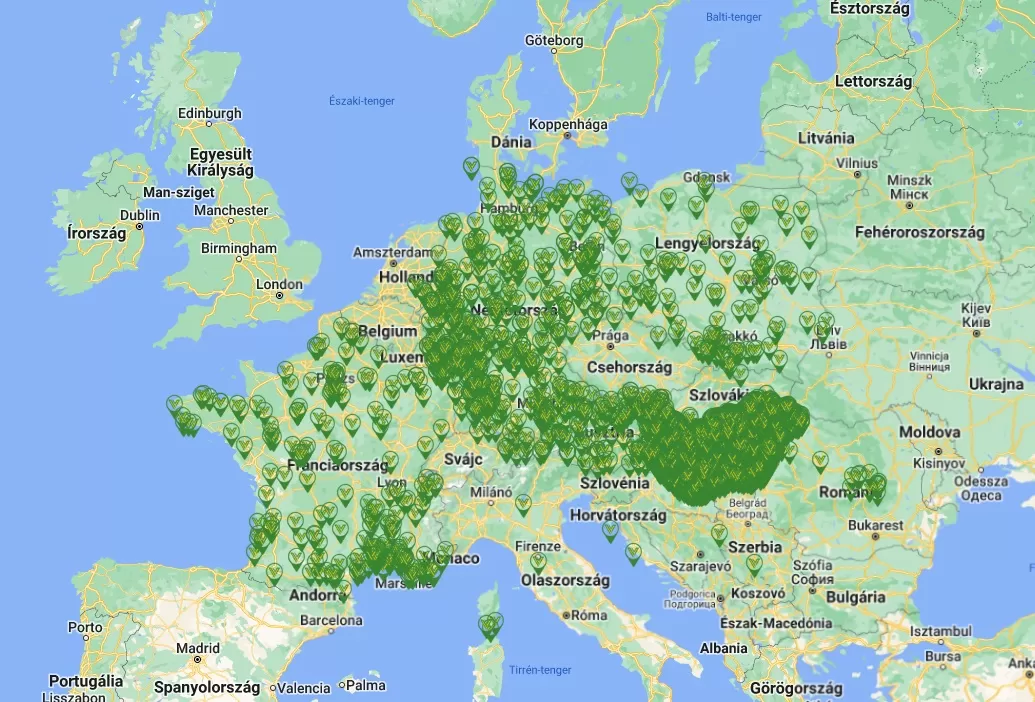
Where people use Vadalarm product
See on the map who uses the Vadalarm product or products. Our products are popular all over Europe. Our community is built on quality! Be one of the users who like quality, choose the Vadalarm brand!
Successful subscription!
See, where people are using Vadalarm products!
Thank you!
Our colleague will contect to you soon. (Expectedly still 4 pm today.)